
Mingsong Li
I am an Assistant Professor in the School of Earth and Space Sciences at Peking University. My research focuses on paleoclimate, stratigraphy, astronomical forcing, paleohydrology, Earth-system modeling, data assimilation, and time-series analysis.
My group studies how Earth’s climate, oceans, and water cycle changed during warm intervals of deep time. We work with geological records, computational tools, and model-data comparison to ask how quickly environmental change happened, how it differed from place to place, and what mechanisms connected climate, sea level, groundwater, and ocean chemistry.
I also develop open research tools, including Acycle for cyclostratigraphy and paleoclimate time-series analysis, and DeepDA for paleoclimate data assimilation.
News
Orbital forcing of Early Triassic climate and sedimentation revealed at Dayulin
Published: October 2, 2026
Dr. Haotian Zhang’s first-author study in Science China Earth Sciences establishes a floating astronomical time scale for the Dayulin section in North China using the 405 kyr long-eccentricity cycle. Sedimentary noise modeling identifies a 1.2 Myr obliquity modulation cycle linked to Earth–Mars orbital interactions, highlighting long-term orbital influences on terrestrial hydroclimate and depositional stability. The results strengthen terrestrial–marine stratigraphic correlation and provide geological constraints for refining astronomical solutions.
Fish and export productivity rose together during ancient warming
Published: September 24, 2026
A Nature Communications study co-authored by Mingsong Li links increased pelagic fish productivity with greater export productivity during the Paleocene–Eocene Thermal Maximum. Geological records and Earth system simulations suggest that intensified weathering supplied phosphorus to the ocean, supporting higher productivity over long timescales. The findings highlight how productivity responses to warming depend on timescale.
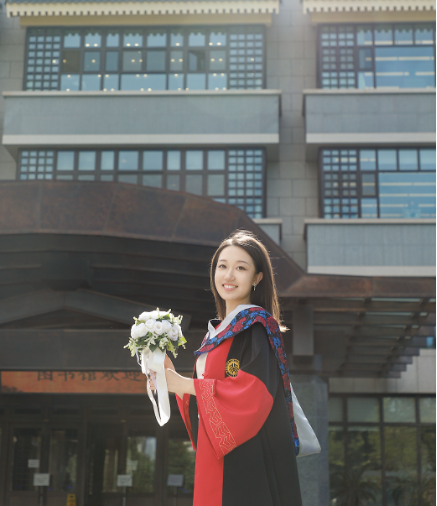
Haotian Zhang joins the group as a Boya Postdoctoral Fellow
Published: September 24, 2026
Congratulations to Haotian Zhang on joining the Deep-Time Global Change Group at Peking University as a Boya Postdoctoral Fellow!
Qingqing Jiang publishes a study of orbital controls on early Eocene deep-water formation
Published: September 17, 2026
Qingqing Jiang’s first-author study in Paleoceanography and Paleoclimatology, with Mingsong Li as a co-corresponding author, uses cGENIE simulations to investigate early Eocene North Pacific circulation. The models suggest that eccentricity-modulated precession could shift convection from intermediate to deep waters, strengthening ventilation and offering a possible mechanism connecting orbital forcing with climate and carbon-cycle variability.
Welcome Jiayuan Ren to the group
Published: September 16, 2026
We welcome Jiayuan Ren to the Deep-Time Global Change Group for her undergraduate thesis research. She plans to continue in the group for her PhD studies.
Tracing climate signals through Late Paleozoic water cycles
Published: September 9, 2026
A review in Earth-Science Reviews co-authored by Mingsong Li synthesizes geological evidence and climate simulations to examine hydrogeologic change during the Late Paleozoic Ice Age. It outlines how continental configurations and orbital forcing shape hydrology, weathering, and sedimentation, with basin conditions modifying the signals preserved in rocks. The framework helps interpret ancient climate records and climate-sensitive resource distributions.
Ancient sediments suggest solar-linked fluctuations in shallow-water oxygenation
Published: August 3, 2026
A study co-authored by Mingsong Li in Earth and Planetary Science Letters reports solar-cycle signals in 1.3-billion-year-old iron-rich laminites from Shennongjia, China. The findings suggest solar variability may have influenced local shallow-water oxygenation through hydroclimate and microbial processes, revealing decadal-to-centennial environmental variability during the Mesoproterozoic. The proposed mechanism still requires climate-model testing.
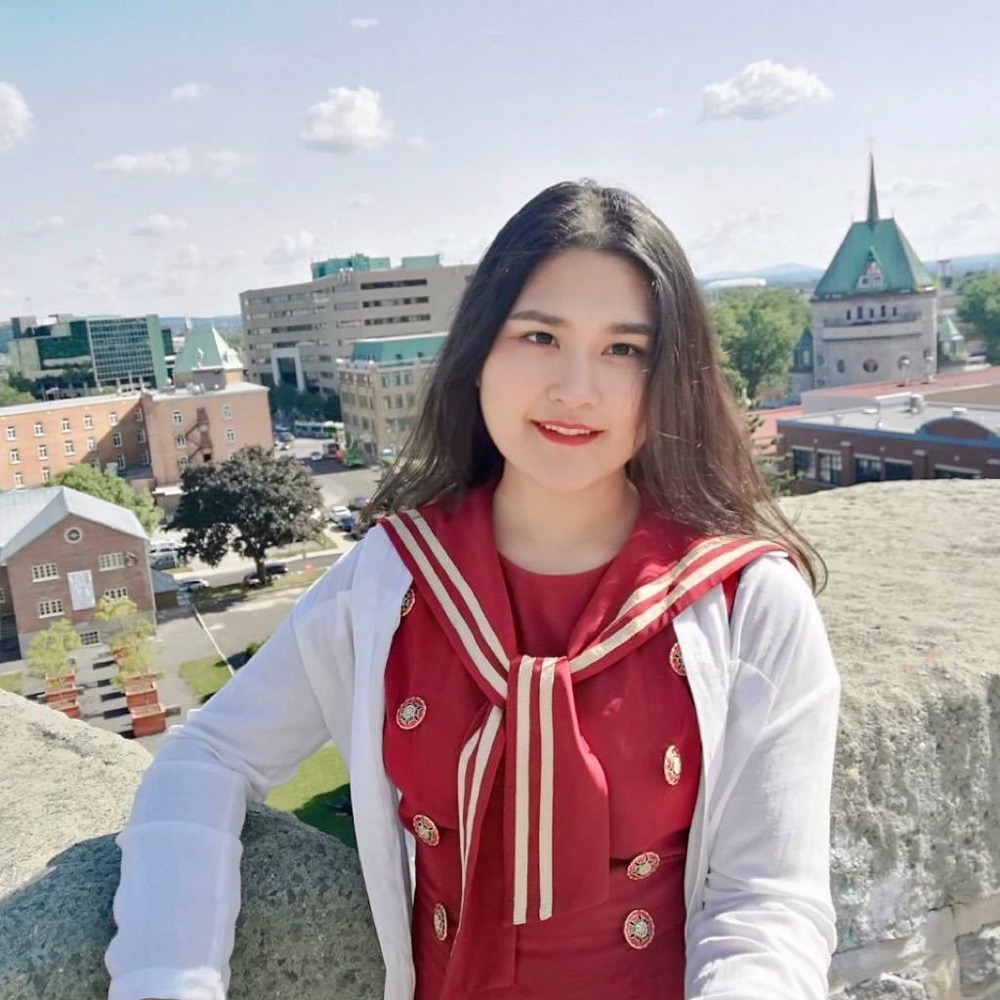
Kaixuan Ji begins a new chapter as a Lecturer at CUGB
Published: August 1, 2026
Congratulations to Kaixuan Ji on her appointment as a Lecturer at China University of Geosciences, Beijing (CUGB)! We wish her every success as she begins this new chapter in her career.
Stronger carbon export did not ensure more efficient burial during Miocene warming
Published: July 31, 2026
A study co-authored by Mingsong Li and Qingqing Jiang in Earth and Planetary Science Letters examines eastern equatorial Pacific sediments spanning the Middle Miocene Climate Optimum. Sedimentary records and LOSCAR-P simulations suggest that warmer intervals enhanced carbon export but reduced burial efficiency through enhanced remineralization, showing why greater ocean productivity need not translate into stronger long-term carbon sequestration.
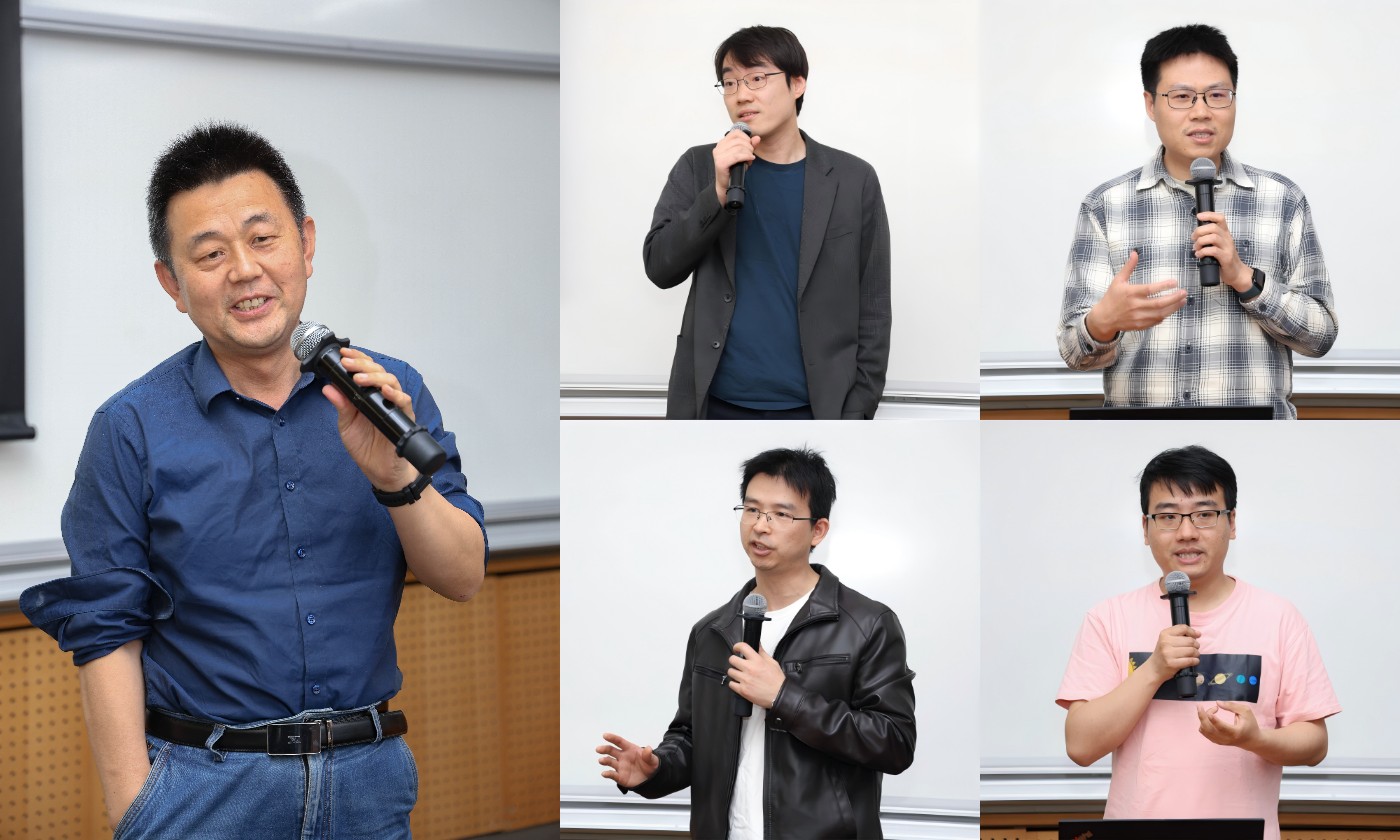
Mingsong Li presents AI explorations in deep-time, deep-space, deep-earth, and deep-sea research
Published: April 28, 2026
Mingsong Li participated in a Peking University salon and gave a presentation titled "AI Explorations in Deep-Time, Deep-Space, Deep-Earth, and Deep-Sea Research." The talk covered Bayesian inversion of stratigraphic sequences for reconstructing Solar System orbital evolution, as well as Transformer models and data assimilation for studying climate sensitivity and ocean acidification.

Mingsong Li receives the 2026 Sun Shu Prize from the International Association of Sedimentologists
Published: April 24, 2026
Peking University reported that Mingsong Li received the 2026 Sun Shu Prize from the International Association of Sedimentologists. The recognition highlights his contributions to cyclostratigraphy, deep-time paleoclimate research, and quantitative tools for sedimentary geology.